
Search engine optimization has changed radically over time. Since keyword stuffing, through basic stuffing techniques, up to sophisticated semantic planning, keyword research by marketers remains dynamic. But there is one concept that makes SEO professionals across the world curious: overture keyword searches.
Interested in the history of the overture keywords search and how the modern search state research was founded, as well as in how you can implement its essentials today, this comprehensive guide will guide you through all the necessary information.
Despite being an SEO novice, an online marketer, a blogger, or a business owner who aims at reaching out to a global audience, the skills to master overture keywords search concepts can give you an opportunity to identify profitable search terms, conduct competitive analysis, and develop a sustainable ranking strategy.
It is time to explore this influential keyword research technique.
What Is Overture Keywords Search?
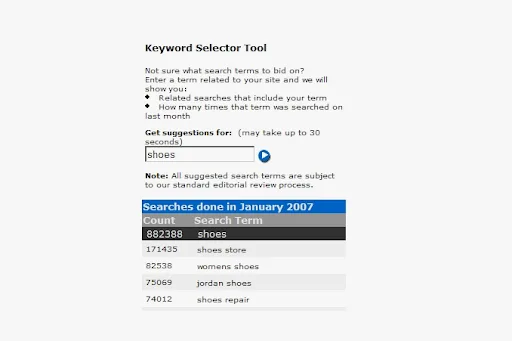
Overture keywords search is the name of the keyword research system that was part of the Overture platform, which was one of the first paid search and keyword information providers, but was later acquired by Yahoo. It enabled the marketers to view the frequency of searching certain keywords within a given time frame.
Since the original tool used in Overture is no longer functional, the search technique used in Overture keywords search has remained a very powerful tool in the current search engine ecosystem of SEO.
An essential point was the basic, yet revolutionary one:
Real search volume data should be used to find out what keywords users are actually entering into the search engines.
Such a conception is the basis of all contemporary key-word research engines.
The SEO Significance of Overture in History.
There was a time when marketers used to depend on guesswork before sophisticated key-word tools were created. That was altered when Overture introduced quantifiable information regarding the demand for searches.
It presented three significant principles of search engine optimization:
- Getting to know the actual search volume.
- Detecting variations of keywords.
- Attacking commercially viable expressions.
- This changed the practice of SEO between intuitive optimization and data-driven optimization.
The same logic that was applied by the introduction of overture keywords search can be followed in current-day keyword research tools, such as paid or free search engines: search behavior of users is analyzed, and content related to high-demand keywords is constructed.
Some of the reasons why Overture Keywords Search is still relevant today.
Although the original Overture interface does not work as an independent system, the Overture keyword philosophy of search is applicable in global SEO campaigns.
Here’s why it still matters:
- It concentrates on the keyword selection based on demand.
- It lays emphasis on actual searching rather than suppositions.
- It underlines variants of keywords and long-tail terms.
- It promotes a content approach based on data.
Search intent and user behavior are all in modern-day SEO. The initial system of Overture has created a prelude to these practices.
The way Overture Keywords Search worked
Knowing how the system worked assists you in implementing the same in the current SEO environment.
The overture keywords search tool presented:
- Monthly search volume
- Keyword variations
- Related search phrases
- User behavior patterns
As an illustration, when somebody typed in the query: digital marketing, the tool would show related expressions like:
- Digital marketing agency
- Online marketing services
- Internet marketing plan.
- SEO services
This enabled the marketers to broaden their scope in terms of keyword targeting as opposed to a single keyword.
New Tools Influenced by Overture Keywords Search
The current keyword research systems are based on the same logic as that of the Overture keyword search. Modern tools provide:
- Search volume data
- Keyword difficulty scores
- Competition levels
- Cost-per-click estimates
- Trend analysis
Introduction Search intent classification The classification of search intent represents a widely applied concept in search engine marketing, particularly within the context of online search engines. Introduction Search intent classification Search intent classification is a concept being actively applied to search engine marketing, especially in the context of online search engines.
Technology has changed a bit, but the basic principle is still the same: locate keywords people are searching for and generate optimized content about them.
Advantages of the Application of Overture Keywords Search Principles in 2026.
There are many advantages of implementing overture search, keywords search methodology to your search strategy.
Improved Keyword Accuracy
Keywords that are selected using data are no longer a matter of guesswork and are even more important in that they make certain that your content is in the goals of actual user queries.
Higher Organic Traffic
As you target into the high demand search words, the likelihood of ranking and traffic generation is high.
Better Conversion Rates
The key words that are commercially viable draw more users who are prone to conversion.
Stronger Content Strategy
Pillar content and topic clusters can be constructed to be based on keyword variations.
Global Market Targeting
Overture-like keyword search gives you the flexibility to implement your approach on other markets based on search patterns in new territories.
The Use of Overture Keywords Search in the Contemporary SEO.
Although the initial tool has disappeared, there is still the chance to apply the strategy.
Start With Seed Keywords
Start with a mainkey that is important to your niche.
Analyze Search Volume
Determine actual monthly search volume using current keyword tools.
Expand With Variations
Determine similar long tail keywords and semantic phrases.
Understand Search Intent
Establish the purpose of the user as informational, navigational or transactional.
Create Structured Content
Create landing pages, guides, and blog posts, which are optimized to primary and related keywords.
Long-Tail Keywords and Overture Keywords Search.
The value of the long-tail keywords is among the strongest lessons of the overture keywords search.
The long-tail keywords usually:
- Have lower competition
- Have greater conversion potential.
- explicit search intent of a match.
- Generate targeted traffic
- SEO
- You target:
- SEO services at a low cost to small businesses.
The strategy boosts ranking opportunities and supports user needs with a high specificity.
Overture Keywords Search Global SEO Campaigns.
Considering that your target market is global, the use of overture keywords search methodology would necessitate international keyword adaptation.
You should:
- Country-specific search volumes research.
- Read and comprehend language differences.
- Research local search activity.
- Determine patterns of intent in the neighborhood.
The success of global SEO requires one to appreciate the way various areas search the similar products or services.
Using Overture Principles, Keyword Clustering.
In contemporary SEO, the focus is on the authority of the topic and not individual keywords.
You can form keyword clusters with the help of Overture keywords search terms:
- Primary keyword
- Sponsoring secondary keywords.
- Related semantic terms
- User-generated queries
This will help give your content a more topical relevance and rank better.
How to avoid those Keyword Research Mistakes.
The following mistakes should not be made when using overture keywords search principles:
- Using keywords that are of very high volume.
- Ignoring search intent
- Overall, this ignores long-tail phrases.
- Keyword stuffing
- Not analyzing competition
A balanced keyword targeting guarantees sustainable SEO growth.
The shortcut to the content with the help of the Overture Keywords search strategy.
To optimize effectively:
- The main keyword should be placed in the introduction intuitively.
- Various features in the content body.
- Insert the keyword in subheadings where applicable.
- Include it in the final part, not by imposing.
- Good natural readability.
Search engines have taken into consideration user experience rather than the density of keywords.
Participation of Data in Overture Keywords Search.
Overture presented the principle of SEO as based on quantifiable data.
Today, data helps you:
- Track keyword performance
- Monitor ranking changes
- Measure organic traffic
- Change strategy according to analytics.
SEO is not a one-time task. It has to be continuously improved on the basis of performance statistics.
Modern AI Keyword Tools vs. Overture Keywords Search.
Contemporary AI applications are capable of offering semantic analysis and predictive suggestions of keywords.
The basis, however, is the same:
- User search behavior
- Demand analysis
- Keyword grouping
- Commercial viability
- Overture provided the basis of this evolution.
How to make a Content Plan with Overture Keywords Search.
- The first step is to come up with the main themes in your niche.
- The second step entails the identification of high-volume supporting keywords.
- The third step will involve the creation of pillar pages and supportive blog posts.
- Step four is concerned with the internal linking strategy.
- Step five follows the ranking of improvements over time.
Stability and quality are the keys to the effectiveness of long-term SEO.
What lies ahead for Keyword Research?
The search engines are taking the direction of:
- Voice search
- AI-driven search intent
- Semantic indexing
- User behavior modeling
However, it is still the case that the demand data regarding keywords are central even in advanced systems.
The principles of overture keyword search are still deemed to affect the way SEO specialists organize their research and content strategies.
Frequently Asked Questions
What is the overture keywords search?
Overture keywords search is a type of early keyword research system that presented search volume and other relevant keyword insights and informed current SEO practices.
Is the overture keywords search still in existence?
The initial tool is no longer in use, but the principles of keyword research are extensively applied in contemporary SEO tools.
Why is the overture keywords search relevant in search engine optimization?
It brought about data-based keyword selection where marketers optimized content with regard to the actual search demand.
What is the application of the overture keywords search today?
To implement its methodology, you can use the modern tools of analysing search volume, variations, and user intent with the help of modern keyword tools and create content afterwards.
Does overture keyword search aid in international search?
Yes. The business can be able to target various parts through the demand-based keyword approach since it predicts the local search behavior.
Conclusion
Research on keywords is the secret to triumph in SEO campaigns. The basis set by the overture keywords search still forms the basis of modern optimization strategies, although technology keeps advancing.
The result of this is that by prioritizing actual search demand, discovering variations, intent, and developing structured material around data-driven insights, you can establish a powerful search engine framework that functions at the global level.
By properly applying the principles of overture keywords search during your key-word research and content planning process, you will place your webpage in long-term growth, improved rankings, and organic traffic, which are long-term.
SEO is no longer a game of speculating what the users desire. It is regarding what they are already searching–and delivering just that.
And it is the permanent strength of the overture keyword search.

