
Phones still sit at the center of business conversations. Sales calls. Support requests. Quick internal check-ins that would take ten emails to resolve.
But the way companies handle those calls has been quietly changing.
A few years ago, most organizations I worked with relied on traditional PBX hardware tucked away in a server room. Expensive to maintain. Painful to upgrade. And surprisingly fragile when teams started working from different locations.
Now the conversation almost always circles back to one thing: the IP PBX system.
Not because it’s trendy. Because it solves a bunch of everyday problems businesses keep running into.
When Communication Starts Slowing Teams Down
One manufacturing client I consulted for had a simple issue that kept turning into a bigger one.
Their sales team sat in one office. Customer support was in another building across town. Calls were bouncing between desks, transfers were slow, and customers often had to repeat the same problem three times.
Nothing was technically “broken.” The phone system just wasn’t built for how the company worked anymore.
After moving to an IP PBX system, calls were routed based on availability and department automatically. Support agents could answer from softphones on their laptops. Managers could see call activity without asking IT for reports.
Within a few weeks, customers stopped complaining about being transferred around.
That pattern shows up again and again across industries.
Flexibility Matters More Than Hardware
Traditional PBX setups are rigid. Adding a new user usually means wiring changes, configuration work, sometimes even extra equipment.
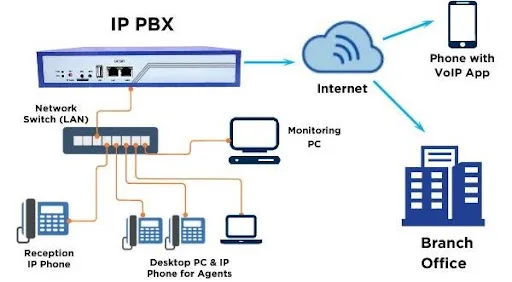
An IP PBX system works differently because it runs over the internet rather than fixed telephone lines.
A new employee joins the team?
You add an extension through software.
Does anyone work remotely?
They log in from a laptop or mobile app and their extension follows them.
This small change has made life easier for companies that hire remote staff, operate across cities, or run distributed support teams.
Communication stops being tied to a physical office.
Smarter Call Handling With IVR
Another reason businesses are moving toward modern phone systems is better call routing.
This is where IVR services come in.
You’ve probably experienced it yourself:
“Press 1 for sales. Press 2 for support.”
That’s the simple version. Good IVR services go further.
A logistics company I spoke with uses IVR to identify repeat callers and send them straight to the right department. Their frequent freight partners skip the general queue entirely.
It saves customers time.
It saves agents time too.
And the support team can focus on solving issues instead of figuring out where a caller should go.
Cost Control Without Complicated Accounting
Another practical factor is cost.
Traditional phone systems often come with long-term maintenance contracts, expensive upgrades, and charges for adding lines.
An IP PBX system shifts much of that into software. Companies usually pay based on users or call volume.
For growing businesses, this makes budgeting far easier.
A startup can begin with a small setup and expand gradually without replacing hardware every time the team grows.
Finance teams tend to appreciate that.
Real Visibility Into Customer Conversations
Managers often struggle to understand what actually happens during customer calls.
How long are people waiting?
Which departments get the most calls?
Are customers hanging up before reaching an agent?
Older systems rarely provide clear answers.
Modern IP PBX system platforms include dashboards showing call activity in real time. Supervisors can spot overloaded teams, adjust routing, or add agents during busy hours.
One e-commerce support team I worked with discovered that most of their missed calls happened during lunch hours. After adjusting shifts slightly, they cut abandoned calls almost overnight.
Small insights. Big impact.
Integration With Tools Teams Already Use
Phone systems used to operate in isolation.
Now companies expect their communication tools to work with CRM platforms, help desks, and internal messaging tools.
An IP PBX system can connect with many of those platforms. When a customer calls, the agent may already see their previous tickets or order history.
Support conversations become more informed.
Customers feel recognized instead of starting from scratch.
It’s a small detail that changes the tone of the conversation.
What Businesses Should Think About Before Switching
Switching communication systems shouldn’t happen on impulse. A few practical steps help companies get it right.
Map your call flow first.
Understand how calls currently move between teams and where delays happen.
Choose IVR options carefully.
Too many menu choices frustrate callers. Keep it simple.
Train employees properly.
Even intuitive systems need a short learning period. A bit of preparation prevents confusion later.
Check internet reliability.
Since an IP PBX system depends on internet connectivity, stable bandwidth is essential.
These steps don’t take long but save headaches during the transition.
The Quiet Shift Happening in Business Communication
What’s interesting about this change is how quietly it’s happening.
Companies rarely announce that they’ve replaced their phone systems. Yet more organizations are doing it every year.
Remote work, distributed teams, customer expectations — they all pushed businesses to rethink how calls are handled.
And somewhere along the way, the IP PBX system became the practical answer many companies settled on.
Not flashy.
Just a smarter way to keep conversations moving.

